BetMGM Vikings Game Highlights American Sports Slot Gap
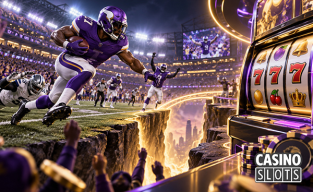
BetMGM launched an exclusive Minnesota Vikings-themed casino game in Alberta and Ontario on September 10 as part of a new Canadian partnership with the NFL team.
The game, Vikings Big Kick LuckyTap, is available through BetMGM's own online casino rather than as a broadly distributed slot sold across multiple operators. That distinction points to a wider pattern in online casino content: some of the sports that generate the most betting activity in North America remain surprisingly scarce as mainstream slot themes.
Basketball, American football, baseball and hockey attract billions of dollars in sportsbook wagers, but they occupy a relatively small corner of global slot catalogues. Soccer, by contrast, has proved much easier for developers to turn into games that can travel between operators and markets.
The result is a curious mismatch between what American sports bettors follow and what slot studios routinely build.
BetMGM's Vikings Game Shows How American Sports IP Reaches Casino Lobbies
BetMGM's deal with the Minnesota Vikings covers the use of the team's intellectual property in Canada.
The partnership announced on September 10 included Vikings Big Kick LuckyTap, which launched exclusively through BetMGM in Alberta and Ontario.
Matt Prevost, BetMGM's chief revenue officer, described the operator's library as "one of the largest collections of sports-themed casino content in North America."
That is significant because it illustrates where much of this content actually exists.
American sports brands do appear in casino games, but often through bespoke licensing agreements designed for a particular operator and specific markets. Those titles may never become standard catalogue products that dozens of casinos can buy from the same supplier.
A game restricted to one operator in two provinces therefore adds to BetMGM's sports-themed library without doing much to increase the number of American sports titles available across the wider industry.
The same pattern can be seen elsewhere.
Design Works Gaming has said BetMGM brought it the opportunity to create a game using Wayne Gretzky's likeness. Rather than developing a conventional reel slot, the studio used its LuckyTap format, allowing players to interact with a shooting-style game.
Its Derek Jeter title, released this year, is also categorised by SlotCatalog as a non-slot game type.
American sports intellectual property is reaching casino customers. It is simply doing so differently from many traditional slot themes.
Global Slot Catalogues Still Heavily Favour Other Themes
The scale of that gap becomes clearer when sports titles are compared with the rest of the slot market.
SlotCatalog listed 52,513 slots and other casino games when checked in September 2026, spread across 854 themes.
Its sports category contained 1,398 titles.
Egypt alone had 2,012. Fruit had 6,690.
Even within sports, soccer dominates much of the available content. The database's football category contained 786 titles, with many referring to association football rather than the American game, while a separate Soccer World Cup theme contained another 175.
Basketball had 88 titles, hockey 59 and baseball 48. Tennis had 38.
SlotCatalog did not list American football as a standalone theme among its 854 categories, meaning gridiron titles that do exist are mixed into broader classifications.
Another industry dataset points in the same direction. CROCO Games, which monitors roughly 42,900 titles from about 440 providers, places sports among the industry's smaller thematic categories.
That is despite the sheer volume of new casino content being produced.
CROCO estimates that the industry now releases about 4,900 games each year, compared with roughly 1,160 in 2019.
SlotCatalog's Release Radar for August 10 to 16 recorded 170 new games in a single week. Coins appeared in 63, adventure in 52 and gold in 47. None of the leading themes identified in the release summary was a sport.
The shortage is therefore not being caused by a shortage of new games.
Basketball Betting Shows How Large the Audience Can Be
The difference becomes more striking when casino catalogues are compared with sportsbook activity.
The Illinois Gaming Board's 2025 figures show basketball generating $3.39 billion in handle, more than any other individual sport in the state.
Football generated $2.13 billion, baseball $1.55 billion and tennis $1.15 billion.
Soccer accounted for $649 million, hockey $319 million, while boxing and mixed martial arts combined for $123 million.
Those figures do not prove that sportsbook customers necessarily want basketball or baseball slots. Illinois also does not have a regulated online casino market, so sportsbook handle and casino-game demand cannot be compared directly.
The datasets measure different things.
But they do show how heavily American sports audiences concentrate on games that remain relatively uncommon as casino themes.
Basketball generated more than five times as much Illinois betting handle as soccer in 2025, yet SlotCatalog contained only 88 basketball titles.
Baseball drew more than twice soccer's handle and had only 48 titles. Tennis also generated substantially more Illinois handle than soccer while accounting for just 38 games in the database.
By contrast, boxing alone had 137 titles.
The comparison is imperfect because SlotCatalog is global while the sportsbook figures come from a single US state. Tags also overlap and do not necessarily capture every sports-branded game.
Even so, the difference is substantial enough to raise the question of why the biggest American sports have not become larger slot categories.
Soccer Licences Are Easier to Distribute Across Markets
Licensing appears to provide part of the answer.
Soccer stars, leagues and clubs have repeatedly entered arrangements that allow developers to turn their brands into games capable of being distributed across multiple regulated markets.
Booming Games released Ronaldinho's Streetball Bonanza on June 11, 2026, continuing a licensing relationship with the former Brazilian international that began in 2023.
Inspired took a similar approach when it launched LaLiga Grand Chance in the UK and Malta in August.
Those releases are built around sports brands but remain recognisable casino products designed for wider distribution.
American sports deals often look more localised.
The BetMGM Vikings arrangement is a clear example. The team's branding rights covered Canada, while the resulting casino game launched specifically at BetMGM in Alberta and Ontario.
That creates value for the operator and rights holder, but it does not give a studio the freedom to sell the same game to casino operators across multiple jurisdictions.
A developer building around a league, club or athlete therefore has to weigh the licensing cost against the number of markets and operators through which the finished game can realistically be distributed.
That calculation looks very different from building an unlicensed theme such as Egypt, fruit, gold or mythology.
Most Sports Games Still Use Proven Casino Mechanics
There is another reason sports themes remain relatively narrow: developing a game that genuinely behaves like a sport is more difficult than placing a sports theme over existing slot mathematics.
Inspired's LaLiga Grand Chance was described as combining one of the supplier's established slot mechanics with the appeal of the football league.
Booming Games took a similar approach with Ronaldinho's Streetball Bonanza.
The title uses a 6x5 scatter-pays grid with cascading wins and multipliers reaching 100x. The mathematics do not depend on football. The sport provides the visual identity and branding around a familiar casino engine.
Design Works Gaming's LuckyTap system is designed with the same flexibility in mind.
The company markets LuckyTap licensing as a mechanic that can carry anything from a popular sports team to a film franchise.
That makes commercial sense.
Reusing proven mechanics allows studios to shorten development cycles and avoid rebuilding the mathematical model behind every licensed release. CROCO Games has argued that reskinning an existing engine can cost considerably less than building and certifying new game mathematics.
The drawback is that the finished game may resemble the sport visually without actually playing like it.
A basketball game in which possessions, shooting streaks or scoring runs genuinely influenced the underlying game structure would require more development than placing basketball imagery over established reels or a pre-existing instant-win format.
In regulated US online casino markets, new mechanics may also require additional testing and regulatory approval.
Developers therefore face two separate costs: building something genuinely different and securing the sports rights required to make it recognisable.
Sportsbooks Are Building Products Around the Games Themselves Instead
Casino studios are not the only companies competing for customers interested in American sports.
Operators have increasingly developed products in which the sporting event itself determines the outcome.
FanDuel Predicts provides a particularly clear example.
FanDuel developed the standalone product with CME Group and launched it in late December 2025. Its sports event contracts initially covered baseball, basketball, football and hockey — precisely the major American sports that remain relatively scarce in slot catalogues.
The product is structurally different from both sports betting and casino games.
Event contracts settle according to real-world outcomes rather than random-number-generation software, while prices change as market participants buy and sell positions.
The prediction market apps offering these contracts operate under a federal commodities framework whose application to sports has become the subject of disputes between operators, regulators and state authorities.
FanDuel initially offered sports contracts only in states without legal online sports betting and excluded tribal lands. Its launch announcement said sports markets would be withdrawn from states that subsequently legalised conventional sports betting.
DraftKings and Fanatics have since entered the event-contract market with products of their own.
That creates another form of competition for a developer considering a basketball or football-themed casino product.
A customer interested primarily in the sport can increasingly choose a product whose value depends on what actually happens in the game rather than a casino title merely using its imagery.
For slot studios, that makes the question more difficult: how much value does a sports licence add when the same operator may already offer products tied directly to the underlying competition?
Basketball's 88 Titles Are the Number to Watch
For now, basketball provides perhaps the clearest measure of whether this part of the casino market is changing.
SlotCatalog's basketball count stood at 88 in September.
That number is small beside both the scale of the overall game catalogue and basketball's position in American sports wagering.
A meaningful shift could come in one of two ways.
A major American league, team network or players' organisation could offer licensing terms allowing studios to distribute games more widely across operators and jurisdictions.
Alternatively, a developer could build a sports-focused casino engine compelling enough to justify the additional development and certification costs without depending heavily on licensed branding.
Products such as Pop-A-Shot LuckyTap hint at one route by making interaction resemble shooting basketballs, although the same basic LuckyTap system is also used for football and hockey concepts.
BetMGM's Vikings launch shows that demand for sports-themed casino content does exist.
What it also shows is why the category remains unusual.
American sports games tend to arrive through narrow licensing agreements, operator exclusives and reusable mechanics rather than as widely distributed slots that can fill hundreds of casino lobbies.
Until those economics change, America's biggest sports may continue generating far more activity in sportsbooks and event-contract markets than they do on the reels.
.png)